Baltoro Glacier Trek in Pakistan
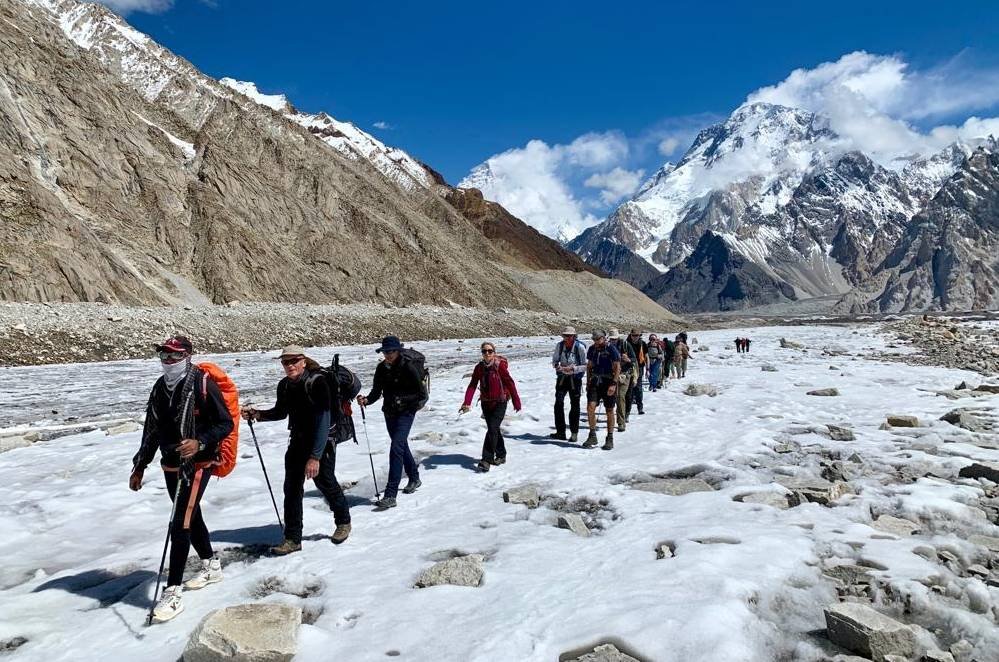
The Baltoro Glacier Trek in Pakistan is a challenging high-altitude trekking adventure through the heart of the Karakoram. The route combines remote mountain trails, rocky moraine, enormous glaciers, high-altitude camps and spectacular views of some of the world’s highest mountains.
But how difficult is the Baltoro Glacier Trek?
The Baltoro Glacier Trek is generally considered challenging to strenuous, particularly because of its altitude, rugged terrain, long trekking days, remote environment and unpredictable mountain weather. The difficulty increases as the route progresses toward Concordia and the K2 Base Camp, where trekkers reach elevations of approximately 5,100 metres depending on the exact route and location.
The trek is physically demanding, but it does not require every participant to be a technical mountaineer. With appropriate physical preparation, gradual acclimatization, suitable equipment and an experienced trekking team, well-prepared hikers can undertake the expedition.
The standard K2 Base Camp route and the more demanding K2 Base Camp + Gondogoro La Trek should, however, be considered separately because Gondogoro La involves a substantially more technical high-altitude section.
Baltoro Glacier Trek Difficulty at a Glance
Before planning the expedition, it is useful to understand the main factors that make this trek demanding.
| Factor | Difficulty |
|---|---|
| Altitude | High to very high |
| Terrain | Rocky, uneven and glacial |
| Trekking duration | Approximately 2–3 weeks depending on itinerary |
| Daily walking | Several hours on most trekking days |
| Weather | Highly variable mountain conditions |
| Accommodation | Remote mountain camps |
| Physical fitness | Good to excellent recommended |
| Technical climbing | Not normally required on the standard route |
| Acclimatization | Essential |
| Gondogoro La option | More technical and demanding |
The current K2 Base Camp itinerary published on TrekkingBaltoro.es includes long trekking stages across the Baltoro and reaches a maximum around 5,150 metres on the K2 Base Camp day.
What Makes the Baltoro Glacier Trek Difficult?
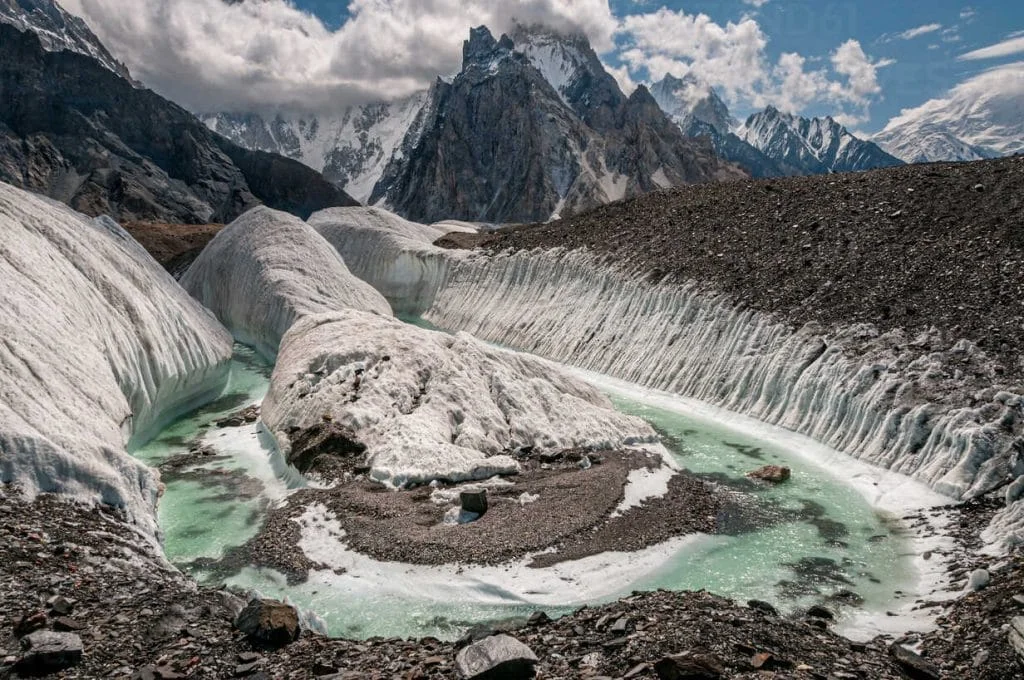
The Baltoro Glacier difficulty comes from several factors working together rather than from one particularly difficult climb.
Trekkers have to deal with:
- High altitude
- Long walking days
- Rocky and uneven terrain
- Glacial moraine
- Snow and ice
- Cold temperatures
- Rapidly changing weather
- Remote mountain camps
- Limited facilities
- Physical fatigue accumulated over many days
- The need for careful acclimatization
The route becomes progressively more demanding as you travel deeper into the Karakoram.
The early stages around Skardu and Askole are generally less demanding than the high-altitude sections around Urdukas, Goro II, Concordia and K2 Base Camp.
1. Altitude Is One of the Biggest Challenges
Altitude is arguably the most important factor when considering Baltoro Glacier Trek difficulty.
The journey begins in the Skardu region at approximately 2,200–2,500 metres before the trekking route gradually climbs toward the higher camps of the Baltoro Valley.
As elevation increases, the amount of oxygen available to the body decreases. This means that walking at 4,000–5,000 metres can feel considerably harder than walking the same distance at sea level.
The route eventually reaches approximately 5,100 metres at K2 Base Camp, depending on the precise route and location.
Possible altitude-related symptoms
Trekkers can experience:
- Headache
- Fatigue
- Dizziness
- Loss of appetite
- Nausea
- Difficulty sleeping
- Shortness of breath
- Reduced physical performance
Being physically fit does not completely prevent altitude-related illness. Acclimatization and a sensible pace are therefore essential.
2. Acclimatization Is Essential
A major part of a successful K2 Base Camp Trek is allowing your body enough time to adapt to increasing altitude.
A good itinerary should avoid gaining altitude too quickly and should include appropriate rest or acclimatization opportunities.
For example, the current TrekkingBaltoro itinerary includes an acclimatization day around Paiyu before the route continues toward the higher sections of the Baltoro.
During the trek:
- Walk slowly and consistently.
- Avoid unnecessary rushing.
- Drink regularly.
- Eat enough even when your appetite decreases.
- Tell your guide if you feel unwell.
- Do not ignore worsening altitude symptoms.
- Be prepared to descend if required.
The mountain should always dictate the pace rather than the planned timetable.
3. Rocky and Uneven Terrain
The Baltoro Glacier Trek is not a conventional trail hike.
Much of the route involves rugged mountain terrain, including:
- Rocky paths
- Loose stones
- Scree
- Boulders
- Glacial moraine
- Uneven ice
- Snow-covered sections
- Ascents and descents
This terrain can make walking considerably slower than on a maintained hiking trail.
The difficulty becomes particularly noticeable after several consecutive days of trekking, when your legs and feet are already tired.
Good trekking boots with appropriate ankle support are therefore essential.
4. Walking on the Baltoro Glacier
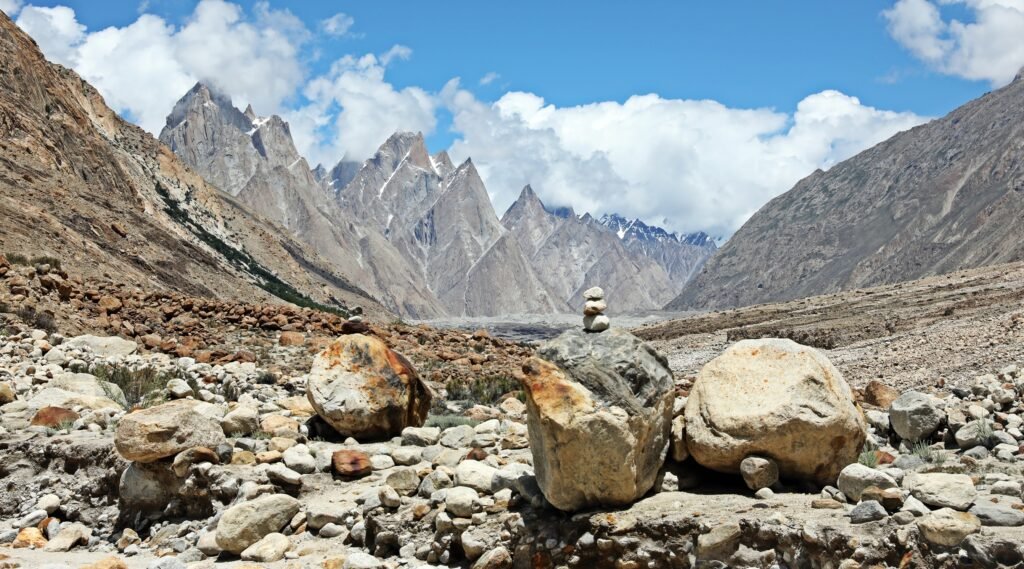
One of the defining features of the expedition is walking through the Baltoro Glacier environment.
The glacier is not simply a flat surface of clean ice. Trekkers encounter rock-covered glacier sections, moraine and constantly changing terrain.
The current TrekkingBaltoro K2 itinerary describes the transition onto the Baltoro around the Paiyu–Urdukas section, followed by continued glacier travel toward Goro II and Concordia.
Walking on moraine can be tiring because:
- Stones move beneath your feet.
- The surface is uneven.
- Progress can be slow.
- Foot placement requires concentration.
- Some sections require climbing over rocks.
- Weather can change the surface conditions.
For this reason, trekking poles can be extremely useful.
5. Long Trekking Days
Another major component of Baltoro Glacier Trek difficulty is the length of individual trekking days.
Depending on the itinerary, trekkers can spend approximately 5–10 hours walking on demanding days.
The most challenging days are not necessarily those with the greatest elevation gain. A long day at high altitude can be extremely tiring even when the overall ascent is relatively modest.
For example, the published 20-day K2 Base Camp + Gondogoro La itinerary includes an approximately 18–20 km K2 Base Camp day with 8–10 hours of walking and a maximum altitude around 5,150 metres.
This illustrates why endurance is so important.
6. Weather Conditions Can Change Quickly
The Karakoram is a high mountain environment where weather conditions can change rapidly.
Trekkers may experience:
- Sunshine
- Strong winds
- Cloud
- Rain
- Snow
- Freezing temperatures
- Poor visibility
- Sudden temperature changes
Weather can also affect the condition of the trekking route.
Snow can cover rocks and ice, while precipitation and melting can affect river crossings and glacier conditions.
For this reason, the itinerary should always have some flexibility.
An experienced local trekking team can assess conditions and make decisions about the safest route, walking schedule and campsite.
7. Cold Temperatures at High-Altitude Camps
Cold is another important part of the Baltoro Glacier Trek difficulty.
Temperatures can drop significantly at night, particularly at the higher camps.
Trekkers should therefore be prepared for:
- Cold mornings
- Freezing nights
- Strong winds
- Cold tents
- Cold sleeping conditions
- Rapid temperature changes
A good sleeping bag and effective layering system are essential.
Recommended clothing system
A practical clothing system can include:
- Moisture-wicking base layer
- Fleece or insulating mid-layer
- Warm insulated jacket
- Waterproof and windproof outer shell
- Thermal trousers
- Warm gloves
- Hat or beanie
- Quality trekking socks
8. Remote Wilderness and Limited Facilities
The remoteness of the Baltoro region is one of the reasons the trek is so spectacular—but it also makes the expedition more demanding.
As you move farther into the Karakoram, conventional hotels, restaurants, shops and medical facilities disappear.
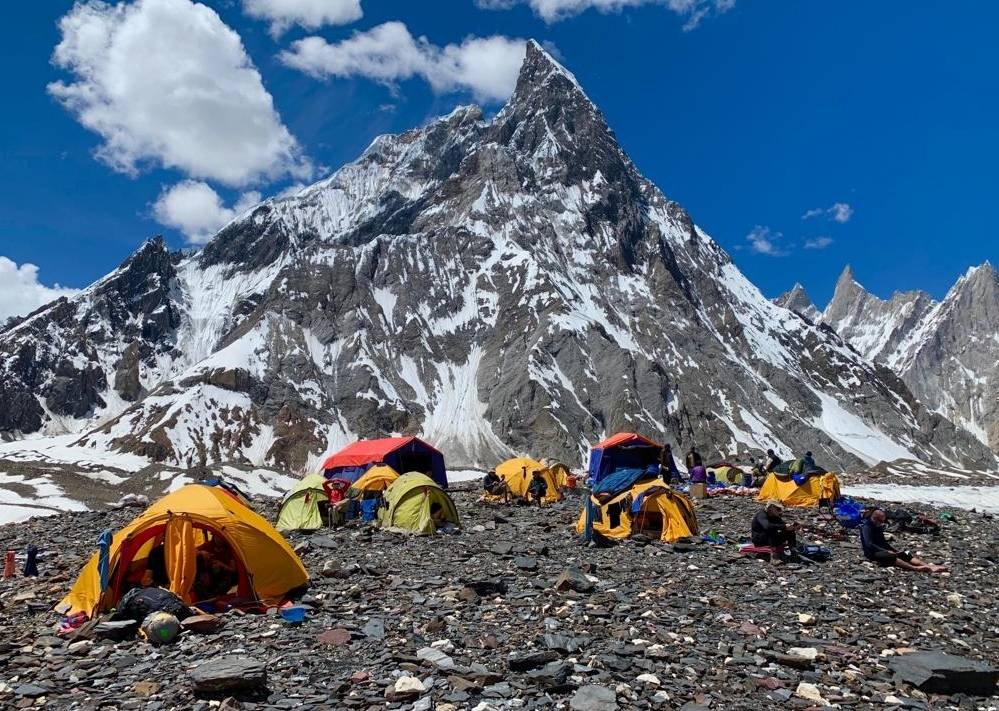
Accommodation is primarily based around mountain camps.
Trekkers should therefore be comfortable with:
- Sleeping in tents
- Basic washing facilities
- Limited connectivity
- Remote mountain environments
- Simple camp facilities
- Long distances from major medical centres
- Limited opportunities to purchase additional equipment or supplies
This is an expedition environment rather than a conventional holiday.
9. Carrying a Backpack
Trekkers generally carry a personal daypack while porters and expedition staff handle larger loads according to the expedition arrangements.
A daypack normally contains items such as:
- Water
- Snacks
- Waterproof jacket
- Warm layer
- Gloves
- Sunglasses
- Sunscreen
- Camera
- Personal medication
- Small personal items
Even a relatively light backpack can feel heavier at high altitude.
A useful preparation strategy is to train with a backpack before travelling.
10. Physical Fitness for the Baltoro Glacier Trek
You do not need to be a professional athlete to undertake the standard Baltoro and K2 Base Camp Trek.
However, good physical fitness is strongly recommended.
Your training should develop:
Cardiovascular endurance
Walking, hiking, cycling, running and stair climbing can improve aerobic fitness.
Leg strength
Useful exercises include:
- Squats
- Lunges
- Step-ups
- Calf raises
- Hill walking
Core strength
A strong core can help with balance when walking over uneven terrain.
Hiking endurance
Try to gradually increase the length and elevation of your training hikes.
Backpack training
Walk with a backpack containing a realistic training load.
The objective is not simply to become strong—it is to prepare your body for several consecutive days of mountain walking.
11. Mental Preparation Is Equally Important
The physical challenge is only one part of the expedition.
The Baltoro Glacier Trek also requires mental resilience.
There may be days when:
- The weather is poor.
- The trail feels longer than expected.
- You are tired.
- You sleep poorly.
- The temperature is uncomfortable.
- Progress is slower than expected.
A flexible and patient attitude can help considerably.
Successful high-altitude trekking is often about maintaining a steady pace rather than trying to move quickly.
12. How Difficult Is the Route from Askole to K2 Base Camp?
The trekking difficulty generally increases as the route progresses.
A simplified progression is:
Askole → Jhula → Paiyu → Urdukas → Goro II → Concordia → K2 Base Camp
The early stages involve lower elevations, while the later sections take place in increasingly high and glaciated terrain.
The current published itinerary on TrekkingBaltoro.es places Urdukas at approximately 4,050 metres, Goro II at approximately 4,300 metres and Concordia at approximately 4,691 metres before the K2 Base Camp day.
This gradual progression is important for acclimatization.
13. Concordia and the Final Approach to K2 Base Camp
Concordia is one of the key points of the Baltoro expedition.
It is situated at the meeting area of major glaciers and is surrounded by some of the most impressive peaks of the Karakoram.
From Concordia, trekkers continue toward the K2 Base Camp area along the Godwin-Austen Glacier.
The K2 Base Camp day can be one of the most physically demanding stages of the standard trek because of the combination of distance, altitude and uneven terrain.
The published TrekkingBaltoro itinerary currently describes this as an approximately 18–20 km day requiring around 8–10 hours, with a maximum altitude of about 5,150 metres.
14. Is the Gondogoro La Trek More Difficult?
Yes, the K2 Base Camp + Gondogoro La Trek should be treated as a more demanding option than the standard K2 Base Camp route.
Gondogoro La rises to approximately 5,585 metres according to the current itinerary published on TrekkingBaltoro.es.
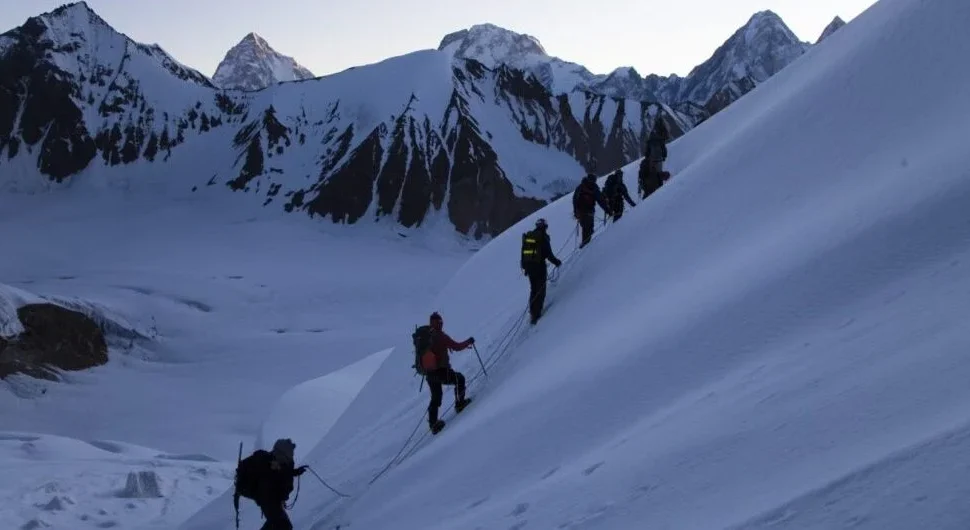
The crossing can involve:
- Snow
- Ice
- Crampons
- Fixed ropes
- Steep sections
- Early-morning or night-time starts
- Long trekking hours
- Significant elevation gain and loss
The current 20-day itinerary describes the Ali Camp–Gondogoro La–Khuspang stage as approximately 13 km and 10–12 hours, with a maximum elevation of 5,585 metres.
This route should therefore be considered an advanced high-altitude trekking option and should only be undertaken when guides assess the route and conditions as suitable.
15. Standard K2 Base Camp Trek vs Gondogoro La
| Feature | K2 Base Camp Trek | K2 Base Camp + Gondogoro La |
|---|---|---|
| Baltoro Glacier | Yes | Yes |
| Concordia | Yes | Yes |
| K2 Base Camp | Yes | Yes |
| Maximum altitude | Around 5,100 m | Around 5,585 m |
| Technical sections | Limited on standard route | More technical |
| Fixed ropes | Generally not a defining feature | May be required |
| Experience required | Good trekking fitness | Strong mountain experience recommended |
| Difficulty | Challenging | Very demanding/advanced |
For trekkers primarily interested in visiting K2 Base Camp, the standard route may be more appropriate.
For experienced mountain trekkers looking for a more technical challenge, the Gondogoro La option provides a different level of expedition experience.
16. Baltoro Glacier Trek Equipment Checklist
Appropriate equipment is essential for managing the Baltoro Glacier Trek difficulty.
Clothing
- Thermal base layers
- Fleece
- Insulated jacket
- Waterproof jacket
- Waterproof trousers
- Warm gloves
- Hat
- Buff or neck gaiter
- Trekking socks
Footwear
- High-quality trekking boots
- Spare socks
- Camp shoes
Trekking equipment
- Trekking poles
- Backpack
- Headlamp
- Water bottles
- Hydration system
- Sunglasses
- Sunscreen
- Personal first-aid kit
Sleeping equipment
- Suitable sleeping bag
- Sleeping bag liner
- Warm sleeping clothes
Personal supplies
- High-energy snacks
- Personal medication
- Toiletries
- Power bank
- Camera equipment
For Gondogoro La, additional technical equipment may be required depending on current conditions and the trekking operator’s assessment.
17. How to Train for the Baltoro Glacier Trek
Ideally, begin training several weeks or months before your expedition.
A practical programme should combine:
Hiking
Complete progressively longer hikes.
Elevation training
Include hills, stairs and steep walking whenever possible.
Strength training
Focus on the legs, hips and core.
Endurance training
Build your ability to remain active for several hours.
Consecutive-day training
Where possible, complete long hikes on consecutive days. This helps your body understand what several days of trekking feel like.
Backpack training
Gradually introduce the backpack you expect to use during the expedition.
18. Who Should Consider the Baltoro Glacier Trek?
The trek can be suitable for people who:
- Enjoy long-distance hiking
- Have good general fitness
- Are comfortable with camping
- Can walk for several hours per day
- Are prepared for high altitude
- Understand that weather can change plans
- Are comfortable in remote environments
- Are willing to follow guide instructions
Previous high-altitude experience is helpful but the requirements depend on the exact itinerary and individual circumstances.
People with concerns about whether they are medically or physically suitable for high-altitude trekking should seek appropriate professional medical advice before undertaking the expedition.
19. How to Make the Baltoro Trek More Manageable
The route cannot be made easy, but preparation can make it considerably more manageable.
Walk slowly
A consistent pace is usually more sustainable than trying to walk quickly.
Hydrate regularly
Drink throughout the day.
Eat enough
Your body requires substantial energy during a long mountain expedition.
Protect yourself from the sun
High-altitude sunlight can be intense. Use sunglasses, sunscreen and appropriate clothing.
Keep your feet dry
Foot care becomes increasingly important during a multi-day trek.
Follow your guide
Local guides understand the route and changing mountain conditions.
Listen to your body
Do not hide symptoms of illness or excessive fatigue.
Accept itinerary changes
Mountain weather and trail conditions can require changes to the planned schedule.
20. Is the Baltoro Glacier Trek Worth the Difficulty?
For trekkers who are prepared for a demanding expedition, the Baltoro route offers an extraordinary mountain experience.
The journey takes you into the heart of the Karakoram, through one of the world’s most dramatic high-altitude landscapes.
Along the route, depending on weather and visibility, trekkers can see legendary peaks including:
- K2
- Broad Peak
- Gasherbrum I
- Gasherbrum II
- Masherbrum
- Trango Towers
- Mitre Peak
- Cathedral Peak
- Uli Biaho
- Mustagh Tower
TrekkingBaltoro.es describes the route as travelling through the Baltoro and Godwin-Austen glacier environment toward K2, with views of several major Karakoram peaks.
The combination of glaciers, enormous mountains, remote camps and the approach to K2 makes this one of the most distinctive trekking experiences in Pakistan.
Baltoro Glacier Difficulty: Final Verdict
The Baltoro Glacier Trek is challenging and physically demanding, primarily because of its altitude, rugged terrain, long trekking days, cold conditions and remote environment.
The most important preparation factors are:
Fitness + acclimatization + equipment + experience + patience.
You do not need to be a technical mountaineer for the standard K2 Base Camp route, but you should take the high-altitude environment seriously.
The Gondogoro La option is considerably more demanding and can involve technical snow, ice and fixed-rope sections. It requires an appropriate level of experience, equipment and favourable mountain conditions.
With careful preparation and an experienced trekking team, the challenge of the Baltoro Glacier becomes part of the reward: walking through the heart of the Karakoram toward Concordia and K2 Base Camp.
Frequently Asked Questions About Baltoro Glacier Difficulty
How difficult is the Baltoro Glacier Trek?
The Baltoro Glacier Trek is generally considered a challenging to strenuous high-altitude trek. The main difficulties are altitude, rocky and glacial terrain, long walking days, cold weather and remote camping conditions.
How high is the Baltoro Glacier Trek?
The route gradually climbs from the Skardu region toward elevations above 4,000 metres. The K2 Base Camp section reaches approximately 5,100–5,150 metres depending on the exact route and location.
Do I need mountaineering experience for the Baltoro Glacier Trek?
Technical mountaineering experience is not normally required for the standard K2 Base Camp route. However, good physical fitness, hiking experience, altitude awareness and appropriate preparation are important.
Is the Baltoro Glacier Trek suitable for beginners?
It can be suitable for well-prepared trekkers with good fitness, but it should not be treated as an easy beginner’s hike. The altitude, terrain, duration and remote conditions require serious preparation.
How many days does the Baltoro Glacier Trek take?
The duration depends on the itinerary. K2 Base Camp itineraries commonly take approximately two to three weeks when approach, trekking, acclimatization, return and contingency days are included.
What is the hardest part of the Baltoro Glacier Trek?
The most demanding sections are generally the higher-altitude stages around Concordia and the approach toward K2 Base Camp, where altitude and long walking days combine with rugged glacier terrain.
Is altitude sickness a risk on the Baltoro Glacier Trek?
Yes. The route reaches elevations above 5,000 metres, so altitude-related illness is a potential risk. Gradual acclimatization, sensible pacing and monitoring symptoms are important.
What is the best way to prepare for the Baltoro Glacier Trek?
Build cardiovascular endurance, strengthen your legs and core, complete regular hill hikes, practise walking with a backpack and become familiar with your trekking equipment before departure.
What equipment is needed for the Baltoro Glacier Trek?
Essential equipment includes suitable trekking boots, warm and waterproof clothing, a sleeping bag, trekking poles, sunglasses, sunscreen, water containers, a headlamp and personal medical supplies. The exact list depends on the season and itinerary.
Is the Baltoro Glacier Trek harder than the Gondogoro La Trek?
The Gondogoro La option adds a higher and more technical mountain pass to the K2 Base Camp route. It can involve snow, ice, crampons and fixed ropes, making it a more demanding option than the standard K2 Base Camp route.
Can I do the Baltoro Glacier Trek without a guide?
Because of the remote high-altitude environment and complex logistics, travelling with an experienced local trekking team is strongly recommended.
What is the best time for the Baltoro Glacier Trek?
The main trekking season is generally during the warmer months, but exact route and weather conditions vary each year. Conditions should be checked with a qualified local trekking operator before departure.
Is the Baltoro Glacier Trek dangerous?
High-altitude trekking involves inherent risks including altitude illness, severe weather, falls, glacier hazards and remoteness. Appropriate preparation, experienced guides, suitable equipment and flexibility can help manage these risks.
How cold does it get on the Baltoro Glacier?
Temperatures can become very cold at night, particularly at higher camps. Trekkers should be prepared for freezing conditions and strong winds.
What should I eat during the Baltoro Glacier Trek?
High-energy foods and regular meals are important. Many trekkers also carry convenient snacks such as nuts, dried fruit, chocolate, energy bars and other calorie-dense foods.
Can weather delay the Baltoro Glacier Trek?
Yes. Mountain weather can affect trekking conditions, transportation, glacier crossings and the overall itinerary. Contingency time is therefore useful when planning the expedition.
What makes the Baltoro Glacier Trek special?
The trek combines remote Karakoram landscapes, massive glaciers, high-altitude mountain camps, Concordia and the opportunity to reach the K2 Base Camp area while surrounded by some of the world’s most impressive peaks.
Plan Your Baltoro Glacier Adventure
Ready to explore the Karakoram?
Explore our detailed guides to the K2 Base Camp Trek, Baltoro Glacier, and Gondogoro La Pass to compare routes and prepare for your expedition.
For trekkers seeking the classic route, the K2 Base Camp Trek provides the opportunity to travel through the Baltoro Glacier toward Concordia and K2.
For experienced high-altitude trekkers, the K2 Base Camp + Gondogoro La Trek adds a demanding mountain-pass crossing to the expedition.
Prepare well. Respect the mountains. Experience the Baltoro.
[…] pass forms part of a high-altitude trekking circuit linking the Baltoro Glacier region with the Hushe […]